Pool Equipment for New Pools in Houston, TX
Pumps, filtration, automation, lighting and purification systems — selected around your pool's size, features and water-treatment strategy.
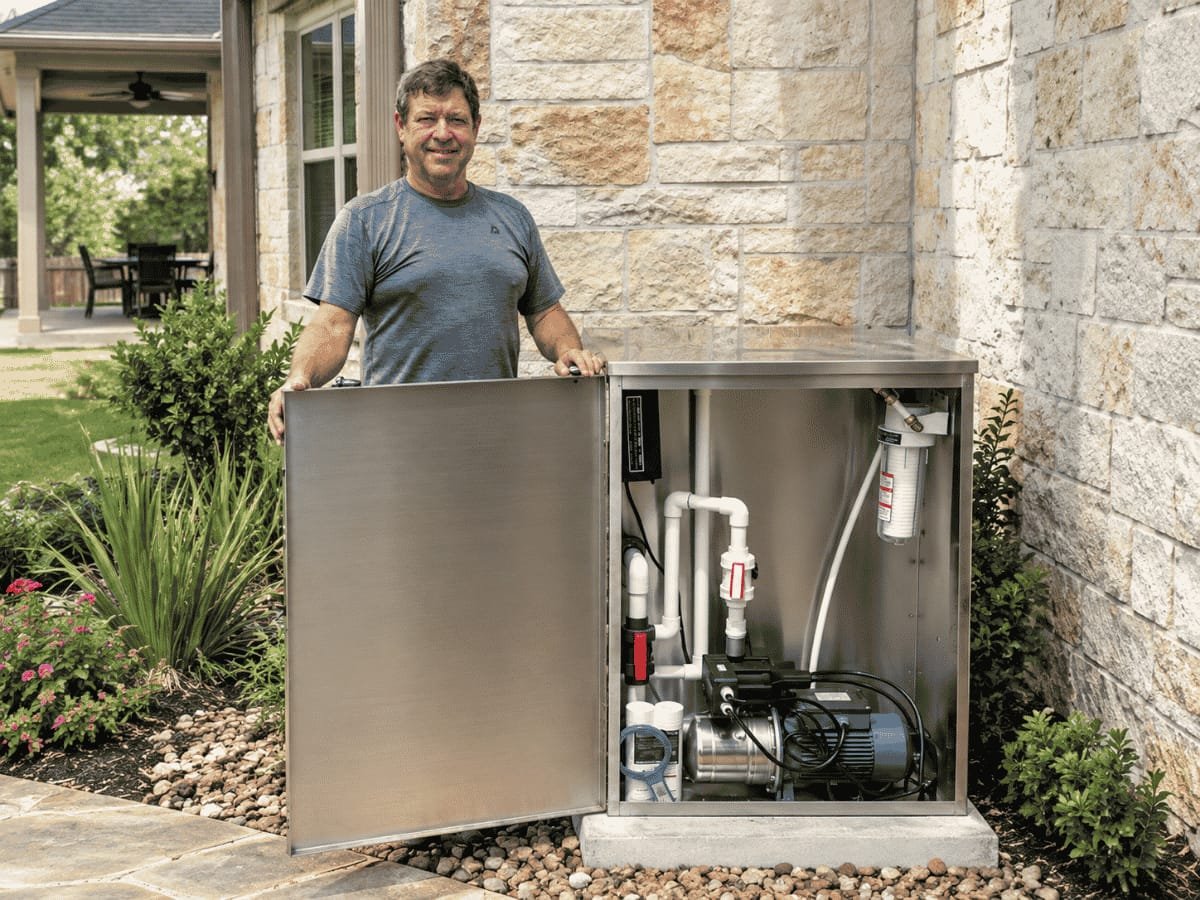
Pool Equipment in Houston, TX
Creative Lifestyle Pools can provide pool equipment for new pools in Houston, TX, with equipment selected around the pool's size, hydraulic requirements, features, and water-treatment strategy. Because the equipment is considered alongside the pool design and plumbing rather than selected as an unrelated afterthought, the system can be planned as a complete package. Call (281) 455-9691 to discuss equipment options for your pool project.
Craftsmanship In Every Detail
A closer look at the artistry, materials and finish we bring to every pool equipment project.
Equipment We Can Provide
The right equipment package depends on the pool being built. A compact pool with basic circulation has different requirements from a large pool with a spa, multiple water features, advanced lighting, and additional water-treatment equipment.
Pool Pumps
The circulation pump moves water through the pool's filtration and treatment system. Pump selection should account for the pool's hydraulic requirements rather than simply choosing the largest pump available. Factors include pool size, plumbing configuration, required flow, filter requirements, water features, spa operation, equipment layout and desired operating schedule. Variable-speed technology may also be considered where appropriate.
Pool Filtration
The filter is responsible for removing suspended particles from the circulating pool water. Filtration equipment can be selected based on the pool's water volume, pump flow, expected use, maintenance preferences and overall circulation design. The filter and pump should be considered together.
Pool Automation
Automation can make a pool easier to operate by bringing selected functions together under a centralized control system. Depending on the equipment configuration, automation may manage pool pumps, spa operation, heating, lighting, water features, filtration schedules and selected water-treatment equipment.
Pool Lighting
Lighting is both a functional and design component of a modern pool. Equipment planning can include lighting for pool interiors, steps, spa areas, water features and surrounding areas. Lighting controls can also be incorporated into the broader pool automation strategy when compatible.
Water-Feature Equipment
Waterfalls, spillways, scuppers, bubblers, and other water features can have their own circulation requirements. The equipment package should account for the intended feature and its required flow. Pump capacity, plumbing, valves, flow control, and feature design all need to work together.
How We Size and Select Pool Equipment
Pool equipment should be selected according to the pool — not the other way around. The equipment requirements can change significantly depending on the size and configuration of the project.
- Pool Volume — Water volume is an important starting point. A larger pool generally has different circulation and filtration requirements from a smaller pool.
- Plumbing and Hydraulic Design — The plumbing configuration affects how efficiently water moves through the system. Pipe size, distance, bends, valves, elevation changes, and equipment arrangement can all contribute to system resistance.
- Water Features — A pool with a waterfall or other feature may require additional flow beyond normal pool circulation.
- Spa Operation — An attached spa can introduce additional circulation, heating, jet, and control requirements.
- Filtration Requirements — The filter needs to work appropriately with the selected circulation system. Pump and filter sizing should therefore be evaluated as a combination.
- Water Treatment — If the project includes ozone or another treatment technology, that equipment needs to be incorporated into the circulation system.
Why Equipment Sizing Matters
Choosing a pool pump simply because it has a higher horsepower rating does not automatically make it better. The objective is appropriate flow.
A pump that is too large for the system can create unnecessary flow, energy use, or equipment demands. A system that is undersized may not provide the required circulation for the pool and its features.
Proper equipment selection considers the entire hydraulic system: Pump → Plumbing → Filter → Treatment → Pool → Features → Return. The components need to function together.
Ozone, Alkaline and Purification Systems
Modern pool projects can incorporate more than traditional circulation and filtration. Creative Lifestyle Pools also works with water-treatment concepts that can be considered during pool planning, including ozone systems and alkaline-water strategies.
Ozone is a water-treatment technology that can support the pool's overall sanitation strategy. It should be integrated with circulation, filtration, and the remaining sanitizer strategy.
Alkaline pool water focuses on maintaining controlled water chemistry and an appropriate relationship between pH and total alkalinity. This is different from ozone.
The two approaches can potentially be incorporated into the same pool project when compatible with the selected system.
Whole-Home Water Purification Is Separate
Household water purification should not be confused with pool water-treatment equipment. A whole-home system treats household water entering the residence. Pool equipment treats and circulates swimming-pool water.
Keeping these systems separate helps homeowners understand exactly what each piece of equipment is designed to do.
Equipment for New Pool Construction
Equipment selection is easiest when it happens during the pool's design and construction process. A new pool provides an opportunity to coordinate equipment pad location, plumbing, electrical requirements, pump selection, filtration, automation, lighting, water features, water-treatment equipment and service access.
Planning these elements together can produce a cleaner and more practical equipment installation.
Equipment for Pool Renovations
New equipment can also be considered when an existing pool is renovated. An older pool may have an aging pump, outdated controls, inefficient circulation, obsolete lighting, aging filtration equipment, limited automation, or older water-treatment equipment.
Renovation provides an opportunity to evaluate the existing equipment instead of automatically replacing every component. The goal is to determine what should remain, what should be upgraded, and what should be redesigned.
Designing a Better Equipment Pad
A pool equipment pad should not be treated as a place to put everything that does not fit elsewhere. Equipment arrangement affects accessibility, serviceability, plumbing efficiency, visual appearance, noise and future maintenance.
A well-organized equipment area makes it easier to identify individual components and perform routine service.
Equipment Placement and Service Access
Equipment eventually needs to be inspected, cleaned, adjusted, repaired, or replaced. That means service access matters from the beginning.
A good equipment layout should provide enough room for technicians or homeowners to access relevant components. Consideration may need to be given to filter access, pump access, valve locations, electrical components, treatment equipment, automation controls and plumbing connections.
Energy Considerations for Pool Equipment
Pool equipment operates repeatedly throughout the swimming season. That makes operating efficiency an important consideration.
Variable-speed pumps, appropriate flow rates, properly sized filtration, and reasonable operating schedules can all influence energy consumption.
However, efficiency should not be reduced to the pump alone. The entire hydraulic system affects how hard the equipment needs to work. The objective is to select equipment that provides the required performance without unnecessarily overworking the system.
What Happens When Equipment Is Selected Too Late?
Waiting until the end of construction to think about equipment can create unnecessary limitations.
Late equipment decisions may affect equipment-pad layout, plumbing, electrical requirements, automation, water features, treatment systems and service access.
Planning early gives the equipment a place within the pool design rather than forcing the finished pool to accommodate equipment decisions made afterward.
Key Features
Circulation pumps
Pump selected for the pool's hydraulic requirements.
Filtration
Filter matched to the pool's volume and circulation.
Automation
Centralized control of pumps, spa, heating, lighting.
Pool lighting
Interior, step, spa, water-feature, surrounding-area lighting.
Water-feature equipment
Dedicated pumps, valves, plumbing for features.
Treatment integration
Ozone, alkaline and sanitizer equipment integrated.
How It Works
-
01
Review the Pool Design
We begin with the pool's size, shape, depth, spa configuration, features, and intended use.
-
02
Review Hydraulic Requirements
The circulation system is considered based on expected flow and plumbing requirements.
-
03
Identify Filtration Needs
The filter is selected in relation to the circulation system and pool volume.
-
04
Account for Features
Waterfalls, spillways, spas, lighting, and other components are incorporated into the equipment strategy.
-
05
Discuss Water Treatment
Ozone, alkaline water, sanitizer system and any other treatment equipment.
-
06
Plan the Equipment Pad
Components are arranged with access, plumbing, serviceability, and installation requirements in mind.
-
07
Coordinate Installation
Equipment incorporated into the construction and startup process.
-
08
Explain Operation
The homeowner should understand the major components and what they are responsible for.
What Affects Pool Equipment Cost
The cost of pool equipment depends on the pool's size, features and the specific equipment selected.
The appropriate equipment package is one that matches the actual pool rather than the package with the most components. Call (281) 455-9691 to discuss pool equipment for your project.
Frequently Asked Questions
You May Also Need
Ready to talk with Jim?
Tell us about your property, timeline and goals. Jim personally responds, usually within one business day.